Showing posts with label Writing. Show all posts

Thursday, November 15, 2012

What Twilight Taught Me About Writing (No. Really)

It's Be-A-Twihard-One-Last-Time week here at Some Screaming Fangirl, where we analyze the books, remember the films, talk about the music, and fangirl all over the place. One. Last. Time.

Today, I'm going to talk about a rare topic - how Twilight influenced me as a writer (especially as a teenage writer, because basically EVERYTHING influences your style then).

1. First Person...Rules: I used to write in 3rd person before the Twilight Saga. But after seeing it used playfully well in the books, I made the switch. Haven't looked back since. While the books may not have the best writing in the world, it has a lot more humor and voice to it because it's in first-person - it's the only way I would have ever believe this super-perfect Bella person to be awkward.


2. If you're going to have a mushy romance, back it up with something un-mushy. Like vampire fight, yeah!: If you ever seen any of the trailers for the Twilight films, you know that they spend a lot of time on one particular scene - THE FIGHT. The fight against the werewolves, the Volturi, the newborns, James. Sure, there's about another two hours of dialogue and staring at each other, but who cares about those scenes?

Anyhow, there is a point to this - if you have one genre, especially something heavy like romance, you're going need a few break scenes to pace it. Shakespeare wrote tragedies, but he still had the random "comic relief" scene here and there, right?

3. Voice and dialogue matters: For example, in Eclipse, my favorite scene is where Jacob kisses Bella, hence her punching him in the face. If you've read the scene in the books, you've probably seen how outrageously hilarious it gets. But if you've just seen the movie, then you probably didn't even remember that scene. That's because it comes off as tense and angry, not funny and memorable. The actors took it a completely different direction.


So when you write dialogue, be sure you convey the emotional tone of the scene. Don't be depressing if it's a happy scene; don't be excited and exclamation-pointy if it's a pretty solemn scene. And so on.

4. Be original. Just not too original: Sometimes I like to imagine Stephenie Meyer did research on vampires and then thought, "Hmmm. How can I completely rearrange all the vampire traditions of yesteryear for this book?" If you're writing about heavily popular topics/creatures (Vampires! Werewolves! Angels! Mermaids! Oh my!) you probably know that you have to change it up to be noticed.

However, there is a point where changing it up becomes complete nonsense. No one talks about how Twilight vampires are conflicted between humanity and hunger, how they have certain "tastes" in humans, or the unique way they transform. No. They talk about how they're "sparkly". When you make a traditional monster your own, have a stopping point.
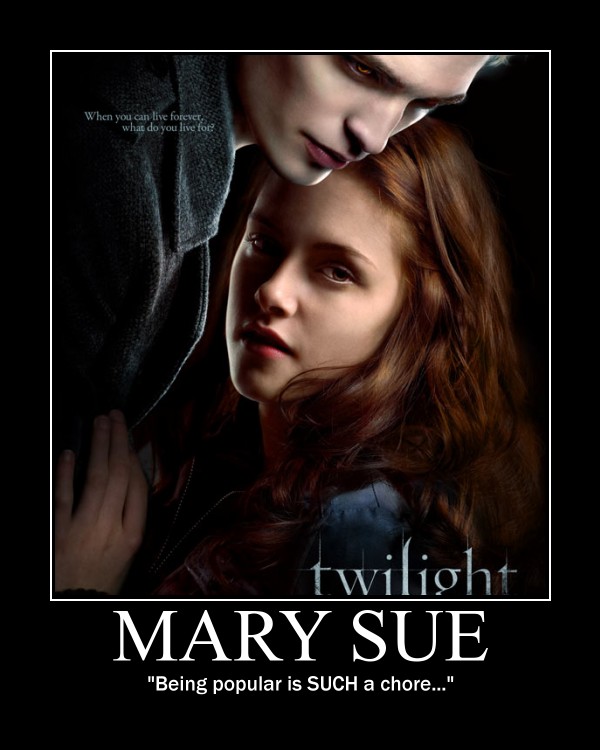


5. Mary Sue, Mary Sue: I had no idea what this type of annoying archetype character was until Bella Swan. And if you don't know, it's time you learned: http://www.springhole.net/writing/marysue.htm . Watch out for the signs, because there is nothing worse than a too-perfect character. Trust me.


Thursday, October 18, 2012

Writers: Learn From ABC (Part Two)

So, Tuesday I told you about how ABC handled its “recap” of both Once Upon a Time and Revenge’s season one.


Now let’s talk about how their fun versions of a TV synopsis can serve as a lesson for writers. After all, after the query letter, the synopsis is one of the most torturous gateways to publication every writer must face. Eventually. 

We get told a lot of advice about them too: synopsis’s must be short, but longer than a couple of paragraphs like on the back of the book, and must sufficiently describe all the plotlines, but not go way too in-depth or off-track, and must tell the ending but not reveal too much because why else would an agent care enough to read it?


Yeah. It’s pretty headache-inducing. So after you’ve read the first post on this and see how ABC handled their recaps of Revenge and OUAT, how can you use that to be more unique with the recap of your book (especially if, like TV shows, your WIP is a series and not a novel?)

1. Focus on the characters
 
Much like OUAT did, make sure you give all your MC’s a paragraph to call their own. If you don’t know your characters’ backstories, how they get introduced, or what they contribute to the tale (hint: It’s not just “why does your hero care about them?” Why does your ----reader----- care about them?) then you have an issue. Make sure you can talk about all your characters like an elitist at a social event BEFORE you ever start on the synopsis. Or submitting, for that matter.


Just a small example of how different EVERY character can be.

2. Give it away.

Let’s say in chapter two, your hero/heroine hears something/meets someone/sees an important item that will play an important, life-or-death role in their tale…later on, around the end of the book. While in your book this can be a subtle detail, in your synopsis you may have to actually talk about it.

So when leading up to your twist endings and surprise epiphanies, make sure you talk about the hints and clues strewn throughout your WIP. Otherwise, you’ll be saying “And so, Awesome Guy remembered what he had learned that one time in the beginning of the book that I forgot to mention, and used that to save the day!” No. Just no.

There is no need to include a "spoiler alert" in a synopsis.

3. Use your voice

If you know anything about query letters, you know how vital “voice” is in your pitches. Pitches are similar to the two paragraphs on the back of the book or on an Amazon summary - a quick, snappy, catchy intro to your story meant to get you readers, agents, and so on.

Yet we seem to forget that synopsis’s should be snappy and easy to read too, not a dull “This happened, and then this happened”. We’re paraphrasing our story, sure, but we’re also trying to keep Mrs. Agent’s attention so she asks for a full manuscript. 


While I’m not saying narrate your synopsis through a secondary character like Revenge did (though not a bad idea…hmm…can we do that?) have a voice. A personality. Really tell your story and sell it. Maybe even narrating through your character wouldn’t be too horrible, and then changing the “I’s” to “she/he’s” if you feel nervous about submitting it that way.

Have you already written synopsis’s for your stories before? What do you consider when you write one? Or if you haven’t written one before, how do you feel about them?

As for a less depressing topic…what do you think of the ABC shows so far?


Later.

Tuesday, October 16, 2012

Writers: Learn From ABC TV (Part One)

If you had the ABC channel on anytime this past summer, you probably remember the million or so promos involving their new shows. Maybe you even remember their epic Sunday night promo about fantastical Once Upon a Time, killer Revenge, and the new but mysterious Park Avenue.


Thanks to the hype of ABC’s (admittedly awesome) Sunday line-up, viewers received two wonderful things.

One: a new song to add to the playlist. Have you HEARD the Skyler Stonestreet song in the background, a “Little Taste”. Pretty catchy tune there ladies and gentlemen.


And two: a recap episode from the returning OUAT and Revenge each.

What am I talking about? Well, every series with complicated plots and intertwining storylines must find some way to help new viewers keep up. Sometimes they do this with a static introduction at the beginning of each episode. Other times, they may just take a moment to recap the last episode. And with every new season, there are always chances of new viewers.

(My personal favorite re-cappers would be Supernatural - not only do they do a “Then” and “Now” - themed beginning, but they end every season with a cool, lengthier montage of the “Road So Far” to the Kansas song Carry On My Wayward Song.)


With the success of OUAT and Revenge, ABC decided to have fun with their recap. They tried it once already with Revenge - dedicating an entire episode to the recap of the episodes so far. Revenge’s first recap episode had aired shortly before the last few episodes of Season One. Not only did it tell the entire story of Emily Thorne/Amanda Clarke so far, but with a whole hour dedicated to recapping, we got a glimpse of all the plotlines, all the B stories, all the details and clues.

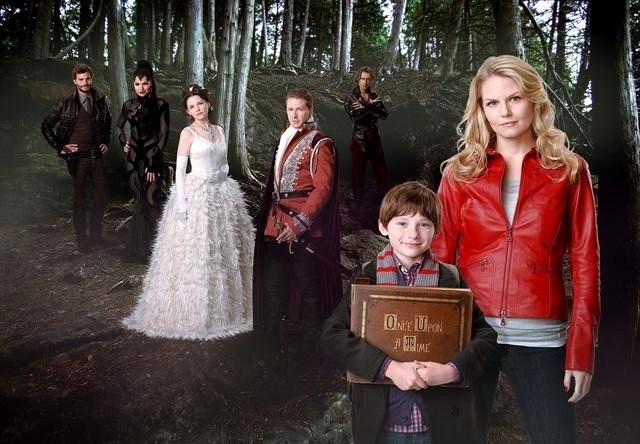
When ABC did new recap episodes, they did it differently. OUAT told the story of their first season by going character-to-character. They introduce a character, briefly go into that character’s backstory (or whatever you may need to know by that point) and then continue on with the story. 


Throughout the hour, they introduce all the characters and the backstories as well as move on though both plots - the story happening in Storybrooke, and the story happening in Fairytale land. This is especially useful because that’s how OUAT works already - every episode was dedicated to telling some of one character’s backstory, or just diving in deeper to the story of Snow White and the Evil Queen.

Revenge freshened up its recap of season one: while it did tell most of the same story, this time with the finale episodes, the recap episode was narrated by one of its main characters, Nolan. (Who the consensus agrees is the most lovable good-guy/evil-sidekick in the show, this girl included). 


Now this worked because while Revenge features a lot of egotistical, stiff, haughty elites as main characters, Nolan is both egotistical and haughty as well as cynical, dramatic, and overall humorous. He has enough emotion for both himself and his partner in crime, the unforgiving Emily Thorne. Since he’s also involved in a lot of the story, behind-the-scenes, he never misses an opportunity to mention his part in the action.

If you watch these recaps, it’s kind of funny: they feel like a television show’s version of a synopsis, don’t they?


How can we use that? Well, this blog post is already a mile long so…let’s discuss that next time!

Later.

Thursday, May 31, 2012

What Season Finales Teach About Series Writing (Part Three: HIMYM and Revenge)

Quick Update: SCHOOL’S OUT FOR SUMMER! Yep, it’s been my first week of summer break and…I’ve done absolutely nothing extraordinary. Even the video-game I’m playing is one I’ve finished before. Pathetic, I know.

Song Stuck In My Head: “Home” by Phillip Phillips. And “Volcano” by Phillip Phillips. And “U Got It Bad” by Phillip Phillips. And “Time of the Season” by Phillip Phillips. Etc. What? This is the first time I picked a favorite from the audition, and the first time one of my favorites WON AMERICAN IDOL! Let me celebrate, even if it’s a week after the finale.

Well, continuing from last week’s series, SSF is exploring all the wonderful things that not-so-wonderful season finales can teach us about series writing.

Today, we tackle HOW I MET YOUR MOTHER (the reigning queen of funny twist endings) and REVENGE, the dark, murder-filled prime-time soap that people watch from guilty pleasure alone.

HOW I MET YOUR MOTHER teaches us to…FINISH WHAT YOU START


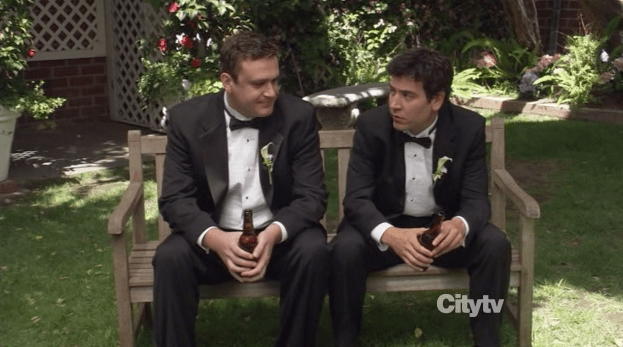
As all HIMYM fans know (and non-fans will learn now so, er, *spoiler alert*) this past season began almost swimmingly. Our hopeless romantic hero Ted, who just can’t seem to get a girl, was at a wedding. A wedding where the groom happens to be Ted’s womanizing second-best friend, Barney. Say what? We know. Well, according to Ted, who tells the whole show in flashbacks, that was the wedding where he met THE MOTHER. Oh yeah.

So what did the first episode of season 7 do? Why tease, of course. Ted was going to the unidentified bride’s room to talk with her. Oh yes! Viewers everywhere think. We are making good progress! Viewers everywhere think. Then, after promising to reveal all very soon, the rest of the season is plagued by every other plotline in the world except flashbacks to Barney’s future wedding (yes, all very confusing, try to keep up).


But the season finale didn’t completely disappoint. After Barney proposed to stripper girlfriend Quinn, Ted finally made it to the bride’s room…oh wait, that bride’s Robin? Throw out the party celebration banners everyone, it’s time for another HIMYM-style mindfuck. But hey, at least HIMYM did us one favor: it finished what it started. After raising one question at the beginning of the year, it answered it. Congrats.

Harry Potter translation: Let’s take…Goblet of Fire. At the beginning, we get a variety of questions. Why is Harry having dreams of an old gardener getting killed? Who were those creepy masked guys at the Quidditch World Cup? Who made Voldemort’s mark appear in the sky and what the hell is his problem? At the end, all of those questions get answered…we just may not like the answer.


Meanwhile...

REVENGE teaches us to be badass!!! Just kidding, it teaches us to NOT LEAVE STUFF THE SAME

Ah, Revenge is its own  brand of mindfuck. In one episode, it manages to make us believe that three villains are dead, two heroes are in trouble, one annoying girl is pregnant, and that break-ups aren’t so bad after all. Once the finale is over, we pause and say, “Hey, wait just a second, are you just messing with us? That chick’s not really dead, is she? And she’s not really pregnant! IT’S ALL A SCHEME! A HOAX! THIS SHOW ISN’T EVEN REAL! WE’RE ALL DREAMING RIGHT NOW, AREN’T WE?


Ahem.

Anyhow, Revenge does like to keep us guessing. It also makes sure that nothing is ever the same. At the beginning of the season, “Emily” was a mysterious outsider who had murder in her eyes for a small group of prissy elite. By the end of the season, Emily’s emotions kept her from cold killing and it turns out she can’t blame her problems on these rich people because there’s a whole bigger, badder conspiracy at work.

The other subplots have their fair share of changes, but this change is the only important part. The character shifts, the antagonist shifts, the motives shifts, and the whole entire story takes a step up. What else could we could ask for? Season two is bound to drop some jaws too. For now, we’ll just keep guessing.


Hunger Games translation: At the beginning of book one, we got a tough, independent girl who avoided the idea of government/the Capitol and whose only concerns were food. Once the first chapter’s over, we got a crazed yet admired girl whose only concerns are making sure the government/Capitol feels her wrath. Really, Katniss is still as strong-headed and determined as always…but now she has I-killed-people baggage to carry around and her fair share of mortal enemies. AND NOTHING SHALL EVER BE THE SAME!!!

Okay. All for today, boys and girls.

Later.

Monday, April 9, 2012

Looking Back at Harry Potter (the movies at least)

Quick Update: Yawn. Monday's almost over, right?

Song Stuck in My Head: Every one of Britney Spear's older songs. And some Nsync and Christina too. Don't ask.


Yep. We're blogging about Harry Potter on "H" Day. Whattaya know?

As you may or may not know, I’m a writer who’s been at war with her WIP since 2008-ish. With my WIP, I’m always in two stages - safely plotting out my next moves, like I’m at headquarters, or charging at it head-on and trying to write out a new version, like I’m in battle. Over the weekend, I returned to the battlefield, hammering out a shiny, new first chapter after a week or so of plotting.

And what did I turn on for inspiration for beginning a story? The first two Harry Potter movies of course. Not just because Post-Potter depression is finally healing (the remedy: Hunger Games mania, woot!). But because the boy wizard series has always been one of my favorite examples of a perfect mix of world building, characterization, and complex plotting. Why not see how it began, and so simply too?

The horror of the blank page. The cure: Harry Potter?

Now that I’ve looked back, here’s some things I’d seen in the movie version alone. Things to think about when you’re at the beginning of your own story.

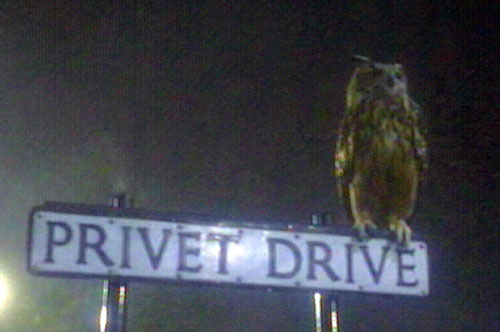
1. It happens quick. While we might have a few chapters in the book version between Privet Drive and Hagrid knocking down the door, the ordeal happens in a blink of an eye in the movies.


Sure, J.K Rowling offers enjoyable world building and back-story, but we learn enough in short film scenes scenes. Harry in closet and cooking eggs, miserable. Dudley counting presents, spoiled. Harry sets snake on Dudley, something else. And cue: Hagrid and the letters.

A lot of times we forget that we have to be quick. Readers sometimes have short attention spans. As much as we want to get the flowery descriptions upfront, and show off how awesome of writers we are, sometimes just getting to the point works too.

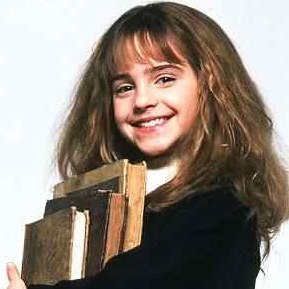
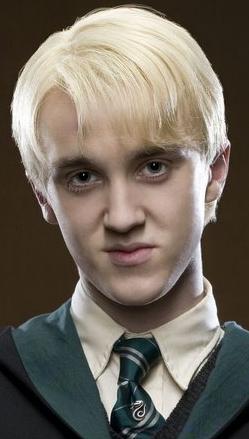
2. Characters always start out exaggerated. Hermione doesn’t talk as sharply and snobbishly as she does in her first scene on the train. Not even Draco can keep his smirk during the series.


Every character starts with an initial, dramatic version of themselves…a version that slowly changes or gets more detailed. So when it comes to characterization, especially in a series, there’s no need to hammer out a three-dimensional personality by page two.

Some of the best characters are multi-layered. The fun comes in peeling off those layers.


3. There will be questions. If your character is thrown into a fantasy world completely unlike their own…there’s going to be a ton of questions actually! Yet, every once in a while there’ll be an urban fantasy, usually YA, story where a character learns about a whole new world, a whole new species of creatures, a whole system of magic and power.


Are they curious? Do they walk around with stars in their eyes or questions marks over their head? Not so much. One thing Harry gets right in both the books and movies is, despite how humble or polite he is at first, he asks a lot of questions. He’s actually a bit curious about this entire otherworld of creatures he’s part of now.

Not that he asked this many questions...


Those are a few things. What can you think of in terms of classic movie/movie series beginnings? Or even book beginnings?

Later.

Wednesday, February 22, 2012

TWIST AT THE END: Tip For Writing Mind-Exploding Endings

Quick Update: Hmmm. So I never did finish that Reality Show series of blogs…hmm.

Song Stuck In My Head: “Ellen”, the Zac Efron/Taylor Swift duet in the style of “Pumped Up Kicks”. My ZacAttack crush is returning. Damn…you…DISNEY… CHANNELLLLLL….!


This post on twist endings couldn’t be more time-relevant. See, TV shows all have three types of “finales”. Series finale, the depressing end to a series that cuts all ties and ends all storylines. Season finale, or TV’s summer vacation. Usually the plots and subplots are resolved, but they’ll hint at what’s to come.

And then you got you these “winter finales”. Translation: Hi, viewers. We’re going to give you a huge Twist Ending and then play re-runs or give a midseason replacement a chance to shine. See ya in two months, suckers!

This year’s been good on them. How I Met Your Mother’s “not yet”. Glee’s car crash. Even American Idol has left me biting off my fingernails over Phillip Phillips’ fate. Okay, that last one isn’t a winter finale, but it still sucks, okay?


Either way, I had a semi-revelation-epiphany last week about twist endings, so I thought I’d share. After all, while most of us manage to have a unique storyline and some memorable characters, the one thing that won’t always come naturally is twist endings. And when you got one, you know it.

Sometimes they’d already been happening without us knowing, like Harry Potter’s Professor Quirrel being the baddie, not Snape. Maybe they reveal a secret about the main character that’s been building up - Sarah Rees Brennan’s “The Demon’s Lexicon” has a excellent example of this.


Or maybe they’re just an action that makes us drop the book. If anyone’s ever read the Morganville Vampires, in which every book ends with a twist ending it seems like, you know this action. I mean, in the first one alone one of the main characters gets STABBED, people. He comes back, but still. Intense.

Twist endings can be really difficult to pull off. It’s like in Inception, when they try to plant an idea without making it seem forced or coming from someone else. They try to make the idea feel as natural as possible. That’s the challenge for writers, especially those who write in a series - how do you foreshadow, reveal secrets and tidbits, try to clue readers in on the important true fax…without making it obvious?


Some stories are great, but predictable. My literature class is reading the Great Gatsby, for instance. The girl who sits next to me, a fellow bookworm, said she could already guess what happens by chapter two. And she did, more or less. She foreshadowed the romance. She foreshadowed the deaths (one of them, at least). It was sort of uncanny.

Whether you’re a fan of spoilers or not, a predictable book is never as fun as a twist ending. After all, those are the ones you remember. The ones that make you look back and say, “EVERYTHING IN THE WORLD MAKES TOTAL SENSE NOW! THANK YOU MAGICAL AUTHOR! THANKYOUUUU!”. That.


My main issue has of course been that I don’t truly know what my twist ending was (is? Will be? Whatever) after changing the storyline so many times over the past few months. Thus, I didn’t know what to hint, what to add. After all, I didn’t know what it led to. So I randomly tried something last week.

I wrote my antagonist’s make-believe “tell-all” scene.

You know in the movies, that corny scene at the end when the villain gets just a tad cocky and says something along the lines of, “Well, since I’m about to finish you off anyways, let me tell you exactly how we got to this point, exactly how I conquered you, usually giving you enough time to fight/escape/snidely remark back?” Well, if you’re having trouble making your story twist and shout, here’s an idea…write your own tell-all scene.

That’s right.

Be corny if you wish, but basically have your villain/antagonist tell your hero/protag all the clues he/she should have seen, what led up to the bad ending. Have him/her go over every diabolical detail. Have him laugh evilly over your hero’s mistakes.


Will you include this scene in your actual WIP? No, probably not.

Will you have an idea of what clues, mistakes, hints, etc. to add throughout your WIP like seasoning? You should. Bonus: you’ll get to flesh out your villain a little bit too, including his motives. Your antagonist does have motives, doesn’t he?

This is just my new way though. So far, I’ve been feeling more confident.

But how about you guys - how have you handled twist endings? What’s the most memorable twist ending you could remember? (Not just books…any twist ending!)

And to end such a dramatically long post...

Later.

Wednesday, February 1, 2012

What I Learned in My High School Library Club Today…

Quick Update: Awesome news, friends. I entered YATopia’s contest and just won my first query critique, by author/blogger/former literary agency employee Jodi Meadows. Woot! To keep up with the spirit, I included a link to her website with her name. Check her out. She’s badass.


Song Stuck In My Head: “Rich Girl” by Gwen Stefani. Orchestra class is learning songs from movie Fiddler in the Roof, including the original “If I Was a Rich Man”, so not too random. Maybe. :/


So, I went to my high school’s fourth Library Club meeting this week. There’s only four regular members and monthly, if even that, meetings. Our purpose: to provide input on which books get ordered. Rather neat power. For instance, I got one of my favorite bloggers Tahereh Mafi and her first novel, Shatter Me, on the top of the list. However, since today was our biggest turn-out, I made some keen observations for my fellow YA writers out there. Some common sense, some interesting. Check it:


1. Power of a Name


Series AND author brand names are still big. Most of our orders were sequels to books we already had, or popular authors like Cassandra Clare and Rick Riordan. While stand-alone novels are always good, most modern teen readers seem to enjoy riding a story beyond one book. As long as the concept is fresh, that is. (Translation: PUT THE VAMPIRE IDEA DOWN! STEP AWAY FROM THE WEREWOLF LOVE STORY!)


2. Get Out the Popcorn


Movie adaptations don’t have to be Harry-Potter size to have an effect. While The Girl With the Dragon Tattoo’s success led to us ordering its sequels, I Am Number Four and Beastly didn’t exactly blow up at the box office. Yet, not only is Beastly one of the most checked out books, but I Am Number Four’s sequels made our list. They also make books easier to recommend - I’m proud to say I successfully convinced a girl to at LAST check out the Hunger Games. Muhahaha. Only took how long before the movie? Pssht.


3. Not Too Feminine After All


The boy-girl ratio of YA readers isn’t too dramatic at my school. Out of our eight members this meeting, three were boys and five were girls. They were also mostly seniors, but I’m guessing that’s more because freshman and sophomores are afraid to join clubs than anything else. However, there is somewhat of a time period (around fourteen to seventeen) where a teen reader might slow their reading intake. That age is also usually when they start transitioning from young books to more adult material.


4. Find Your Niche Audience


Tastes vary here. A bunch. For instance, one girl admitted to being a fan of old, archaic and even foreign versions of stories. Then another girl is big on the author Tamora Pierce. And then there’s me, the weirdo who drifts back and forth between the random vampire series and music-themed indie novels. While bestsellers might attract both avid and fair-weather readers, don’t hold back from writing in an odd genre if that’s where you thrive. Your audience is out there somewhere.


5. Standing Out


Word of mouth is valuable. A lot of authors and book/series names were shared, and I know they’ll get checked out, even bought. So don’t be afraid to get yourself out there and make your name known. Today’s writers need more than just a kick-ass story to survive in this publishing world. You never know when or how your future fans will hear about you, so make everything count.


Okay, peeps, that’s all for now. But stick around later this week for a blog on CW’s version of the “Secret Circle”, as part of my series on TV shows. I had one last week on Napoleon Dynamite. Hopefully journalism class will die down enough that I can continue next week too.


And since my blog has been a tad bland as of late…time for LOLcatz apology! (Man, it seems every one of my posts has these now...)


Later!

Tuesday, November 22, 2011

The REAL Truth About Teen Lit (Post-Simpson's Style)

Quick Update: Oh, hey. Hi.

Song Stuck in My Head: You Make My Dreams Come True by Hall and Oates (yep, all thanks to Glee, I started listening to it like crazy.)

So, I watched an interesting Simpson’s episode whilst watching the American Music Awards. The episode - for anyone who has better things to watch than twenty-year old cartoons I suppose - talked about the young adult literature industry in a very new way.

Basically in this episode, entitled "the Book Job", our favorite feminist/nerdy/bookworm Lisa finds out that her favorite tween book series (the Angela Button books, which has shown up in previous episodes and strongly but innocently resembles Harry Potter) is a scam. Instead of being written by one author with an inspirational underdog backstory, it was a commercial scheme and produced by a team of business gurus for cash money.


While Lisa is enraged, her father and brother seek their own team (which includes Moe the bartender, Principal Skinner, one of the Selma/Patti twins, and the crazy scientist genius whose name I keep forgetting) and create their own masterpiece.

They figure out the formula is orphaned hero plus magical school plus hero finds out their supernatural. They almost go with a vampire hero before realizing every shelf is covered with bloodsuckers. And so they create a story about two troll twins who go to an academy under a bridge where the pixies are popular and the gargoyles are the stoners. Lisa decides to prove them wrong and says she’ll write her own novel - which ends up meaning she’ll organize all her CD’s, play Boggle on her computer, visit book fairs to see the competition, and go to coffee shops to be a “real writer!”


Though the episode did have some merit value - despite airing less than two weeks after the release of the final Harry Potter movie, when everyone is still suffering Post-Potter Depression - it’s time to set the record straight. Especially since my favorite screenwriter Diablo Cody has the movie Young Adult coming out this year and I’m crossing my fingers it’s more realistic.

THE REAL TRUTH ABOUT TEEN LIT


1. It’s one writer (usually). While the occasional book is co-written, it’s usually by best friends who share a love of literature and can actually work together. Writing a book, not just a YA book but ANY book, is such a solitary process at first. You’re stuck with your own mind and imagination and emotions.

Writers will spend months, years, even decades on a story because of its personal meaning. Novels are probably the least commercial part of the entertainment industry because they always start with one person. Movies have crews. Music have a production team. Fashion have designers. And etc., etc..

2. Sometimes, writers are going to have cheesy-cool back stories. Much like J.K Rowling, authors aren’t always the richest people at first. While a lot do have side jobs, especially in this economy, there are many who sacrificed careers and money to write. And when they get successful, you know we’re going to pat them on the back for it. They get to make a living on writing. What’s wrong with that?

3. The publication process is COMPLICATED. In the Simpson’s episode, they go to a literary company business executive. He takes the manuscript, flicks through the pages in two seconds and says it’s great. The team get a first copy what seems like a day later. Later on, they merely puts a flash drive with the manuscript on it into a computer. A screen comes up that says “Publish”. One click and it goes into print, and one week it’s in stores.


It’s not like this at all. There are agents who pour over manuscripts all day long to find a beautiful story; there are editors that seriously consider all the books that are sent to them by these agents; there are copyeditors who find mistakes and revise it to perfection; publishers that make sure the print version is flawless. It seems simple but lately this process takes one to two years for a book to appear on a shelf.

4. No, completely original books didn’t get changed last-minute to vampire books. Spoiler: that nearly happens to their beautiful troll story. It also apparently happened to Stephenie Meyer, whose originally wrote Twilight with a human girl and a golem (Jewish monster and no I’m not kidding look it up) boy love story.


I’m sure all the authors who penned the many, many, many, many (you get my point) vampire books chose that path beforehand. As did the werewolf authors. And angel authors. And dystopian authors. And mermaid authors. And what could be the next authors of leprechaun or teen sci-fi stories for all I know.

And lastly…

5. Neil Gaiman probably knows how to read and is not a scam artist. Long story. Just watch the episode.


It was a funny show though, and Lisa’s procrastination syndrome did portray us a bit too well (thankfully, most of us do get past typing up “chapter one”). The point is to prove stereotypes wrong though, isn’t it? And for all the writers out there who are underdog stories waiting to happen, we believe in you anyways and can’t wait to cry over your Lifetime movie.

And if there isn't anything truer than this emotion portrayed right here:


Later alligators.

Oh, right…the obligatory sorry-I-haven’t-posted-in-forevah-LOLcatz….


(Psst. The last one's my fave. :) )

HOPEFULLY see you next week and have a delicious Thanksgiving! Me, mine will consist of waking up early on a vacation day to see my favorite singer perform in the Macy's Day Parade. Thus is the curse of a fangirl...